At a glance
- Pure TENCEL™ Lyocell wicks moisture and dries faster than any TENCEL™ blend, which matters most at Singapore’s year-round 70 to 90% humidity.
- A “TENCEL™ blend” sold locally is typically 30 to 60% Lyocell, with polyester or cotton making up the rest. The composition tag tells the truth; the marketing copy often does not.
- Weavve Home uses 100% TENCEL™ Lyocell, 80s yarn count, OEKO-TEX Standard 100 certified, with no blends.
Quick tips
- Check the composition tag, not the headline. Anything other than “100% TENCEL™ Lyocell” is a blend, by definition.
- For Singapore’s climate, choose a single-fibre Lyocell over poly-blends. Polyester traps heat and slows moisture release.
- Wash cold, line-dry or tumble low. Pure TENCEL™ holds shape for five years or more at 80s yarn count.
The word “TENCEL™” sells. Walk through any local bedding aisle, or scroll any Singapore marketplace listing, and you will find TENCEL™ bed sheets at three very different price points, all promising the same cooling, silky, eco-friendly comfort. The label says TENCEL™. The price tag says everything from forty dollars to four hundred. Something does not add up.
Most of the time, the gap is hiding in one word: blend. The cheaper “TENCEL™” sheet is not pure Lyocell fibre. It is a blend, often with polyester or short-staple cotton filling in for the costlier raw material. The blend will perform like a blend, not like the fibre it borrows its name from.
This guide is the honest comparison: what a TENCEL™ blend actually is, how it stacks up against pure TENCEL™ Lyocell on every measure that matters, and the verdict for buyers in Singapore’s humidity.
What Makes TENCEL™ Lyocell Different
Before comparing blends to pure, it helps to be specific about what TENCEL™ Lyocell and TENCEL fabric in general actually are. TENCEL™ is a brand name owned by Lenzing, and Lyocell is the fibre type. The fibre is spun from sustainably harvested wood pulp using a closed-loop solvent process that recycles more than 99% of its inputs. That production method is part of why the certified product costs more.

Image From Freepik
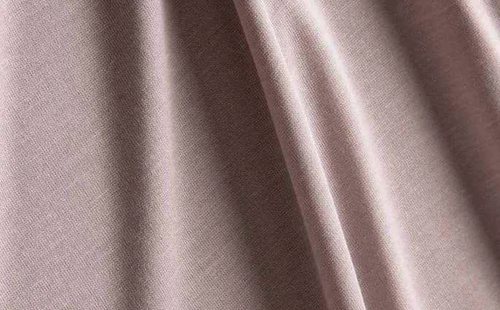
The result is a fibre with a smoother surface than cotton, finer than most natural fibres, and unusually good at moving moisture. Lyocell absorbs around 50% more moisture than cotton and releases it through evaporation rather than holding it inside the fibre. On a humid Singapore night, that means the sheet feels cool against the skin instead of damp and sticky.
If you want the full background, our The Ultimate Guide to TENCEL™ Fibre & Lyocell Fabric covers the chemistry, certifications, and how the fibre is made, while our companion post on why TENCEL™ fabric became so popular traces the rise of the fibre in premium bedding.
For this article, the headline is that the qualities people associate with TENCEL™ bed sheets come specifically from the Lyocell fibre in its pure form. Dilute that fibre with another material, and you dilute the qualities along with it.
What Is a TENCEL™ Blend? What the Label Actually Means
The label “TENCEL™ blend” is doing a lot of work in Singapore retail, and not always honestly. In practice, three blend patterns dominate the market.
TENCEL™ polyester blend. The most common cheap blend. Polyester is added to lower the per-square-metre cost and improve wrinkle resistance. Typical composition is 50 to 70% polyester with 30 to 50% Lyocell. The sheet will look smooth on day one and feel acceptable in an air-conditioned room, but polyester does not breathe. In Singapore’s humidity, polyester traps body heat and slows evaporation, undoing the very property that makes Lyocell desirable.

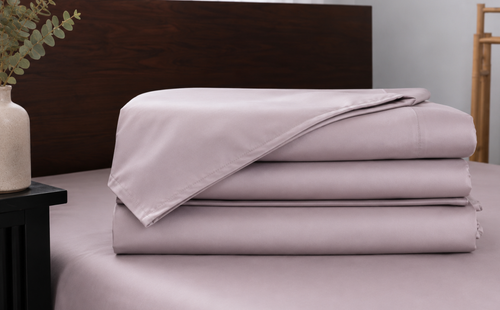
Featuring Weavve Home’s Signature TENCEL™ Classic Set
TENCEL™ cotton blend. A more honest blend, usually 50/50 or 40/60 with cotton. The sheet wears more like cotton than Lyocell. It will breathe reasonably well, but the silky drape, the moisture-wicking, and the fast dry-back all soften toward cotton’s properties. Some buyers prefer this hand-feel; just understand it is not what makes a pure TENCEL™ sheet exceptional.
TENCEL™ with bamboo viscose or modal. A small premium segment. Bamboo viscose and modal are also regenerated cellulose fibres, so the blend behaves a little closer to pure Lyocell than a polyester blend. Quality varies widely, and as our TENCEL™ vs bamboo comparison explains, bamboo viscose performance is largely a function of weave and yarn structure rather than the bamboo plant itself. Many of these labels rely on consumer confusion to charge a premium without delivering the certified Lyocell performance.
A useful comparison to anchor on: our breakdown of TENCEL™ Lyocell vs TENCEL™ Modal explains why even two Lenzing-branded fibres behave differently in finished sheets. The same logic applies to any blend: the finished sheet performs like the average of its parts, weighted by ratio.

Featuring Weavve Home’s Signature TENCEL™ Fitted Sheet Set
|
Worth noting: as our TENCEL™ vs cotton breakdown explains, a fabric only needs to contain at least 30% Lenzing TENCEL™ fibre to carry the TENCEL™ certification. That is why a “TENCEL™” sheet on a cheap shelf might be mostly polyester underneath. |
How to Read a Bed Sheet Label Honestly
Marketing copy on the front of the packaging tells you almost nothing. The composition tag tells you everything. Three things to look for, in this order.
The composition percentage. A genuine pure TENCEL™ sheet will say “100% TENCEL™ Lyocell” or “100% Lyocell (TENCEL™ branded)”. Anything else, including “TENCEL™ Rich” or “TENCEL™ Touch”, is a blend. Those words are unregulated marketing terms.
The certification. A pure TENCEL™ Lyocell sheet from a credible brand should carry OEKO-TEX Standard 100 certification, confirming the fabric has been tested free of harmful substances. Blends sometimes carry this certification too, but its absence on either is a flag worth noticing.

The yarn count. For Lyocell, yarn count is the spec that maps to softness and durability. A higher count means finer yarn and a smoother fabric. Weavve Home publishes its yarn count openly: 80s yarn count in the Signature TENCEL™ Collection. A brand that lists no yarn count, or lists thread count instead (a measurement designed for cotton), is hiding something or simply does not know.
For a deeper look at why these specs matter, see our piece on what yarn count actually measures.

Featuring Weavve Home’s Signature TENCEL™ Flat Sheet
The Side-by-Side Comparison
A summary first, then the explanation under each row.
|
Criterion |
Pure TENCEL™ Lyocell |
TENCEL Blend (typical) |
|
Moisture wicking |
Excellent. Absorbs roughly 50% more than cotton |
Variable. Polyester blends trap heat; cotton blends sit between |
|
Cooling at 80% humidity |
Excellent. Surface stays dry |
Moderate to poor in poly blends |
|
Softness day one |
Silky, drapey |
Acceptable, often crisper |
|
Softness over time |
Holds with proper care |
Polyester pills, cotton softens |
|
Durability (5+ years) |
Strong with care |
Variable; polyester degrades, cotton thins |
|
Wrinkle resistance |
Moderate |
Higher in poly blends |
|
Shrinkage |
Minimal with cold wash |
Polyester none; cotton blends 3 to 5% |
|
Care |
Cold, gentle, low heat |
Easier care in poly blends |
|
Cost per night (5 years) |
Lower over time |
Lower up-front, higher replacement |
|
Certifications |
OEKO-TEX Standard 100 common |
Inconsistent |
|
Sustainability |
Closed-loop, certified fibre |
Diluted by the blend partner |
Cooling and Moisture Management
This is the category where the gap is widest, and the one that matters most for cooling bed sheets Singapore buyers actually rely on.
Pure TENCEL™ Lyocell has a fibre structure that pulls moisture from the skin into the fibre core, then releases it to the air as the sheet surface dries. The cycle is continuous and works passively. In a 28°C bedroom at 80% relative humidity, a pure Lyocell sheet feels several degrees cooler against the skin than the room temperature would suggest. We cover this in detail in our piece on how TENCEL™ sheets behave for hot sleepers.
TENCEL™ blends with polyester lose this property in proportion to the polyester content. Polyester is hydrophobic; it does not absorb moisture, it sits on top of it. A 50/50 blend will feel about half as effective at managing humidity. By the time you reach 70% polyester, the sheet behaves much like a polyester sheet with a Lyocell finish.
Cotton blends sit between. Cotton absorbs moisture into the fibre but releases it more slowly than Lyocell. The sheet stays cool for the first part of the night, then feels heavier as humidity collects.

Featuring Weavve Home’s Cotton Classic Set
Softness, Drape, and Hand-Feel
Pure Lyocell has a distinctive silky drape from the very first wash, no breaking-in period required. This comes from the fibre’s smooth surface and circular cross-section. Blends, especially with cotton, tend to feel crisper on day one and soften over time. Polyester blends start smooth but can develop a slightly plastic sheen with washing.
If hand-feel is the priority, our comparison of TENCEL™ softness against other materials walks through the difference.
Durability and Longevity
A common assumption is that polyester makes a blend “more durable”. For pilling resistance, that is partly true. Overall, it is misleading for longevity.
Pure TENCEL™ Lyocell at 80s yarn count, washed correctly, holds its hand and shape for five years or more. The fibre is naturally strong and wet, which protects it through laundry cycles. Pilling is uncommon when the yarn is fine and the weave is tight.
Polyester blends resist pilling on the polyester side but can develop pilling on the natural fibre side, producing the characteristic patchy texture in older sheets. Cotton blends thin and fades with washing, particularly at warmer temperatures. Our piece on why bedsheets pill and how to prevent it covers this in detail, and the bedsheet lifespan guide puts honest numbers on how long different sheets last.

Care, Shrinkage, and Wrinkles
This is the one row where blends sometimes have the edge. Polyester blends wrinkle less and tolerate hot washes that pure Lyocell does not. If you live with a tumble dryer set to high heat and no time for care labels, a poly-blend is more forgiving.
Pure TENCEL™ rewards a small adjustment to the laundry routine: cold wash, gentle cycle, low or no heat in the dryer. Our care guide walks through it once, and after that, it is automatic. Shrinkage on a properly cared-for pure Lyocell sheet is minimal, well under 2%.
Cost Per Night Over Five Years
The headline price tag is where blends look most attractive. A queen blend set might cost S$80. A pure TENCEL™ Lyocell queen set runs S$250 to S$400 depending on the line. The difference closes, then reverses, when you spread it across the life of the sheet.
A blend sheet at S$80 usually shows wear by year two and needs replacing by year three. Two replacements at S$80 cost S$240 over six years. Per night, that is roughly S$0.11.
A pure Lyocell sheet at S$250 for a single size in our Signature TENCEL™ Classic Set, maintained properly, can last five to seven years. At six years, that works out to roughly S$0.12 per night, but you slept on a measurably better sheet every one of those nights. Buyers who rotate between two sets halve the wear and often extend the lifespan even further.
The honest framing: blends compete on up-front price and lose on per-night cost over time. Pure wins on lifetime value if you can budget for the entry.

Featuring Weavve Home’s Signature TENCEL™ Classic Set
Sustainability and Certifications
Pure TENCEL™ Lyocell comes from the Lenzing closed-loop process, which recycles more than 99% of its solvent. The wood pulp is sourced from FSC-certified forests. The finished pure sheet, with OEKO-TEX Standard 100, carries a clean, verifiable sustainability story.
A blend dilutes that story by exactly the percentage of the blend partner.
A 50/50 TENCEL/polyester sheet is half certified sustainable, half synthetic from petroleum feedstock. A 50/50 TENCEL™/cotton sheet depends on whether the cotton is itself certified, and most blend cottons are not.
If sustainability is part of why you wanted TENCEL™ in the first place, a blend does not really deliver it.
The Singapore Climate Factor
Most of the comparisons above are universal, but humidity tilts the balance. Singapore sits at 70 to 90% relative humidity for most of the year, day and night. That is the condition in which a sheet’s moisture-handling matters most.
In a dry European or American bedroom, a polyester blend can pass as comfortable because there is little moisture for it to manage. In a Singapore bedroom, the same blend will hold heat and feel sticky in a way it would not in a cooler climate. Pure Lyocell is one of the few fibres designed, almost incidentally, for our specific conditions.
For the broader Singapore climate buying framework, our 2026 buyer's guide to the best queen bed sheets in Singapore covers material choice, sizing, and care for the local climate in one place. If you want the wider context first, start there and return here for the blend versus pure question.

Image By Jcomp From Freepik
The Verdict
For most Singapore buyers, pure TENCEL™ Lyocell is the better choice. The reasons cluster:
- It delivers the cooling, moisture-wicking, and silky drape that “TENCEL™” actually promises, with no dilution.
- It performs better in our specific 70 to 90% humidity range.
- The certifications, sustainability, and lifespan all hold up to scrutiny.
- The per-night cost over five years is competitive and often favourable.
When a blend might be defensible. If your bedroom is consistently air-conditioned to 22°C, you tumble-dry everything on high, you replace your sheets every two years anyway, and the up-front price is the binding constraint, a TENCEL™ cotton blend (specifically cotton, not polyester) is a reasonable compromise. Pretty much every other use case in Singapore favours pure.
If you are choosing between Weavve Home’s two pure Lyocell tiers, the Signature TENCEL™ Classic Set is the long-life premium choice; the Everyday TENCEL™ Lyocell Collection is the lower-tier entry that still keeps the 100% Lyocell composition. To complete the set, see the matching TENCEL™ Fitted Sheet Set and TENCEL™ Duvet Cover.

Frequently Asked Questions
What is TENCEL™ fabric made of?
TENCEL™ fabric is made from cellulose extracted from sustainably harvested wood pulp, typically eucalyptus. The pulp is dissolved in a non-toxic organic solvent and spun into Lyocell (or Modal) fibre using Lenzing’s closed-loop process, which recycles more than 99% of the solvent. The finished fibre is then woven into the sheets, towels, and apparel sold under the TENCEL™ brand.
Is a TENCEL™ blend the same as 100% TENCEL™?
No. A “TENCEL™ blend” combines TENCEL™ Lyocell fibre with another material, most often polyester or cotton, in ratios that typically range from 30 to 60% Lyocell. The finished sheet performs like the weighted average of its components, not like pure Lyocell.
Are TENCEL™ blends bad?
Not necessarily, but they are not what people think they are buying. A well-made TENCEL™ cotton blend is a perfectly acceptable sheet at a lower price point. A TENCEL™ polyester blend in Singapore’s humidity is a poor value for what it claims to deliver. The key is reading the composition tag honestly.
Are cotton TENCEL™ blend sheets good?
For a moderate climate or an air-conditioned bedroom, a 50/50 cotton TENCEL blend is a sensible compromise. It softens like cotton, breathes reasonably well, and costs less than pure Lyocell. In Singapore’s full humidity, it still trails pure TENCEL™ on dry-back speed, so it is the second-best choice rather than the first.
Are pure TENCEL™ sheets worth it in Singapore?
Yes, for the climate-specific reason that pure Lyocell handles humidity better than any blend. Singapore’s 70 to 90% relative humidity is precisely the condition that pure Lyocell is unusually good at managing. If you also factor in the multi-year lifespan, the per-night cost is competitive with cheaper blends that need replacing more often.
Are TENCEL™ sheets good for hot sleepers?
Yes. Pure TENCEL™ Lyocell is one of the better-performing fibres for hot sleepers because it absorbs moisture roughly 50% faster than cotton and releases it by evaporation, so the sheet surface stays dry rather than clammy. Polyester blends partially cancel this benefit, which is why hot sleepers in particular should avoid them.
Is TENCEL™ breathable?
Pure Lyocell is one of the most breathable bedding fibres on the market. The fibre’s smooth, fine cross-section lets air move freely through the weave, and its moisture-management means body heat is carried away with the sweat rather than trapped against the skin.
Do pure TENCEL™ sheets wrinkle?
Lyocell wrinkles less than linen and slightly more than polyester blends. Most wrinkling resolves with body heat overnight; the sheet looks fine in the morning. If wrinkle-free finish matters to you above all else, a polyester blend or a cotton-rich blend will outperform pure Lyocell on this single dimension.
Does pure TENCEL™ shrink?
Properly cared for, well under 2% over the life of the sheet. The trick is cold wash and low-heat drying. Pure Lyocell is sensitive to high heat in the dryer, which is the most common cause of shrinkage and fibre damage.
How do I wash TENCEL sheets?
Cold machine wash at or below 30°C on a gentle cycle, with a mild detergent and no bleach. Wash separately or in a laundry bag to avoid snagging from zips and buttons. Line-dry away from direct sunlight, or tumble on low heat. Avoid high-heat drying, which is the main cause of shrinkage and fibre damage. The full routine is in our care guide.
How do I tell a TENCEL™ blend from a pure TENCEL™ sheet on the shelf?
Read the small composition tag, not the front of the packaging. A genuine pure sheet says “100% TENCEL™ Lyocell” exactly. Marketing terms like “TENCEL™ Rich” or “TENCEL™ Touch” mean a blend; some retailers use these phrases hoping you will not look further.
Is TENCEL™ the same as Lyocell?
Lyocell is the fibre. TENCEL™ is Lenzing’s trademarked, certified Lyocell, produced under specific standards. All TENCEL™ is Lyocell, but not all Lyocell is TENCEL™. The TENCEL™ vs Lyocell distinction matters because the trademark guarantees the sourcing and the closed-loop production; a generic “lyocell bed sheets” label tells you the fibre family but not who made it.
How long do pure TENCEL™ sheets last?
Five years and more with proper care, often seven. Two sets in rotation extend that further. For a more detailed lifespan breakdown across materials, our bedsheet lifespan guide puts numbers to each one.
Is TENCEL™ better than cotton?
Different rather than universally better. Pure Lyocell wins on moisture management, cooling, and silky drape. Extra-long-staple cotton wins on the familiarity of hand-feel and tolerates rougher laundry. In Singapore’s humidity, Lyocell is the more climate-appropriate default; our full TENCEL™ vs cotton breakdown compares them side by side.
The Short Version
If you remember nothing else: the qualities people buy TENCEL™ for are specifically Lyocell qualities, and they dilute with the blend.
A pure 100% TENCEL™ Lyocell sheet, particularly one with an 80s yarn count and OEKO-TEX Standard 100 certification, delivers the cooling, moisture-wicking, and silky drape that the brand name promises. A blend delivers a fraction of those qualities, weighted to its composition ratio. In Singapore’s humidity, that fraction is felt every night.
If budget is the binding constraint, a TENCEL™ cotton blend is a defensible compromise. A TENCEL™ polyester blend is not, in this climate. And anything called “TENCEL™ Rich” or “TENCEL Touch” without a 100% composition is a marketing label, not a product specification.
Sleep cool, buy honestly, and check the composition tag.
This guide is brought to you by Weavve Home, a Singapore home brand specialising in 100% TENCEL™ Lyocell and extra-long-staple cotton bedlinen designed for the local climate. Every Weavve Home TENCEL™ bed sheet is built to Singapore mattress dimensions with a 40 cm deep pocket, 80s yarn count, and OEKO-TEX Standard 100 certification. Browse the Signature TENCEL™ Lyocell Collection to start.