At a glance
- Singapore's year-round humidity means dust mites breed in pillows all year, with 80% of Singaporeans sensitised to them.
- A pillow protector sits between the pillowcase and pillow fill, forming a waterproof barrier that a pillowcase alone cannot provide.
- Weavve Home's TENCEL™ Lyocell Pillow and Bolster Protectors are fully waterproof with a breathable PU membrane that is phthalate-, vinyl-, and PVC-free.
Quick tips
- Check your dimensions before ordering: the pillow protector fits 75 x 50cm pillows and the bolster protector fits a 95cm bolster with a 25cm diameter.
- If you sweat heavily at night, pairing the protector with a TENCEL™ pillowcase gives you consistent moisture management across the full sleep surface.
- Use the 3-way zip to hang it fully open after every wash so moisture does not stay trapped inside.
Have you ever stripped your bed on laundry day only to notice unsightly yellow stains on your pillows? Pillows absorb sweat, natural body oils, and dead skin cells every single night. If you aren't protecting them, you are likely cutting their lifespan in half while sleeping on a breeding ground for dust mites and bacteria.
Good thing, waterproof pillow protectors exist. These covers sit between your pillowcase and your pillow, stopping all of that before it ever reaches the fill. In Singapore's year-round humidity, this extra layer matters more than most people realise.
This is where Weavve Home steps in. Our newest pillow and bolster protectors made from cooling TENCEL™ Lyocell are breathable, waterproof, and designed for the way people actually sleep here in Singapore.

Why We Made TENCEL™ Pillow and Bolster Protectors
The TENCEL™ Lyocell Pillow and Bolster Protector did not come straight from a trend report. It came from paying attention to our customers.
After seeing how well they responded to our waterproof TENCEL™ Lyocell Mattress Protector and how it held up over time, extending the line felt like the obvious move. When something works that well, the question becomes: where else can it make a difference?
"We strongly believe in the quality," said Loraine, our Senior Commercial Manager. "So I think the next logical thing to do is to create bolster and pillow protectors using the same material."
The answer came partly from customers themselves. "We also had some customers writing to us asking if we had pillow and bolster protectors," Loraine added. "So we felt the demand was there too."
It is the kind of product decision we feel good about. Not simply chasing what is new, but extending what we already know works, because our customers asked for it.
At the end of the day, that is what drives most of what we do. And that is to make sure the people who trust us with their bedding actually sleep better for it.

Why Pillow Hygiene Is a Bigger Issue in Singapore
The customers who wrote in were not wrong to be thinking about their pillows. What builds up inside a pillow over months of use is not visible from the outside, but it is not harmless either. Every night, dead skin cells work their way through the pillowcase and settle into the fill. Dust mites feed on exactly that. They are microscopic, heat-loving, and in Singapore's climate, they never really get a slow season.
In temperate countries, mite populations rise and fall with the weather, giving sleepers a natural break. Here, the warmth and humidity are year-round, and so is the problem. Research from A*STAR and the National University of Singapore found that 80% of Singaporeans are sensitised to house dust mites, with around 40% developing allergic rhinitis and 15% developing asthma. Figures the researchers described as "among the highest reported so far" globally.
Melanie Carver, Chief Mission Officer at the Asthma and Allergy Foundation of America, put it plainly: "Dust mite debris can trigger allergies, asthma, and eczema." The catch is that mites breed inside the fill, not on the surface. Washing a pillowcase regularly helps with what sits on top. It does nothing for what has already made it through.
Cutting off access is the only thing that works. A waterproof protector creates a physical barrier that stops dead skin cells from reaching the fill in the first place. It is the thinking behind how we built ours.

Are Pillow Protectors Worth It? Waterproof Covers vs. Just Washing Pillowcases More Often
The common question we see on community forums like Reddit is: is washing the pillowcase more often enough? It is not. A pillowcase stops surface transfer but does not form a seal around the fill. Over time, what gets through accumulates inside the pillow in a way that no amount of pillowcase washing reverses. That's why a secondary, waterproof barrier is essential to keep dust mites and bacteria build-up at bay.
This matters practically for anyone who has invested in a quality latex or memory foam pillow. These pillows cannot be machine washed. A protector is the only way to keep the fill itself clean.
Another thing to consider when shopping for protectors: it is worth understanding what separates a truly waterproof cover from a water-resistant one. Many rely on polyurethane backings that trap heat and make noise when you move.
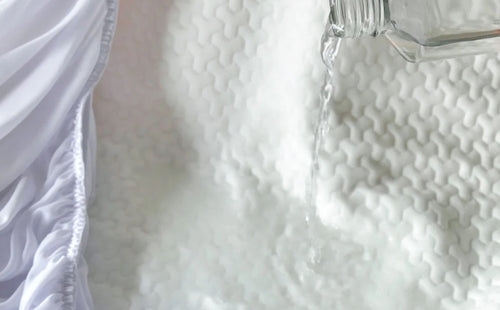
Weavve Home's pillow and bolster protectors are fully waterproof. The 100% polyurethane membrane (phthalate-, vinyl-, and PVC-free) stops liquid from reaching the pillow fill, while the breathable TENCEL™ Lyocell outer layer manages moisture vapour, so sweat is drawn away rather than building up against the skin.

Why TENCEL™ Lyocell & Why It Matters for Hot Sleepers or Allergy Sufferers
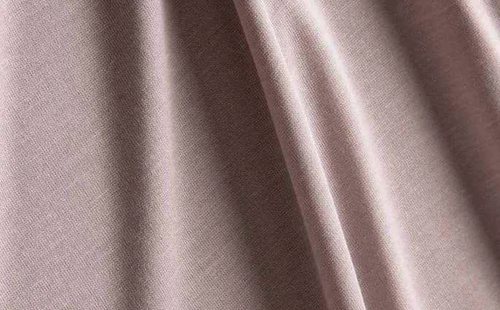
The outer layer of both pillow and bolster protectors is 100% TENCEL™ Lyocell jacquard knit. If you've already slept on our TENCEL™ bed sheets or used our TENCEL™ mattress protector, the feel will be familiar. They're smooth, noticeably cool against skin, and without the synthetic heaviness of polyester.
The two concerns we hear about most from Singaporeans are night sweats and sensitive skin. In our ongoing sleep and bedding concerns survey, which has collected over 7,000 responses since August 2024, night sweats came in as the top reported issue at 35.4%, with sensitive skin and allergies at 23.8%. Both concerns point to the same underlying problem: a pillow surface that holds heat and moisture through the night.

Cooling Comfort for Hot Sleepers
If you frequently wake up feeling overly warm or damp, you already know how much sleep suffers. And at 35.4% of respondents in our survey, it is the single most common complaint we receive from Singaporeans about their bedding.
Research from the Huberman Lab, specifically Episode 84 of the Huberman Lab podcast on sleep optimisation, explains the mechanism clearly. Andrew Huberman notes that "a drop in temperature of 1 to 3 degrees is required for your body to enter a state of sleep," and that rising by the same margin causes waking. A pillow that traps body heat and moisture works directly against this process, interrupting sleep cycles without the sleeper necessarily understanding why.
TENCEL™ Lyocell addresses this at the fabric level. The Sleep Foundation describes TENCEL™ as "noted for both its breathability and moisture-wicking properties, which make it an exceptional fabric for temperature regulation," adding that those "who sleep hot or experience night sweats may particularly appreciate the temperature-regulating properties of TENCEL™."
The waterproof membrane beneath the TENCEL™ outer layer is breathable, allowing moisture vapour to pass through rather than building up against the skin. This is why you get protection without the clamminess you'd expect from a waterproof surface.
And critically, it doesn't crinkle. If you've ever slept on a cheap waterproof protector and been woken by the noise every time you move, you'll know why this matters. This membrane does its job without announcing itself.
For anyone who struggles with temperature regulation, this combination of breathable TENCEL™ outer layer and a non-crinkling waterproof membrane gives you protection without the drawbacks of cheaper alternatives. Heat and moisture are drawn away from your head and neck, keeping your sleep environment dry and consistently cool through the night.

Designed for Sensitive Skin and Allergy Sufferers
Sensitive skin and allergies were the third most cited concern in our survey, reported by 23.8% of respondents. For many, the irritant is not the pillowcase itself but what has accumulated inside the pillow over months of unprotected use.
Your face rests on your pillow for up to eight hours a day. Because TENCEL™ Lyocell manages moisture so effectively, it creates an unfavourable environment for bacterial growth, which matters when a material is in contact with your skin for that long.
Dust mites love warm, damp environments like an unprotected pillow. By keeping moisture out of the pillow's core, these protectors cut off the dust mites' food source. No moisture means no conditions for mites to thrive.
Both protectors are OEKO-TEX certified. Every component, including the outer fabric, membrane, and stitching, has been independently tested and confirmed free from harmful substances.
Whether you have eczema, acne, or seasonal allergies, sleeping with a clean, chemical-free protector underneath your pillowcase makes a practical difference, particularly for those with reactive skin.

TENCEL™ vs. Other Fibres
Here is how TENCEL™ Lyocell holds up against the two materials you are most likely to see in competing pillow and bolster protectors.
TENCEL™ vs Bamboo
Both TENCEL™ and bamboo offer softness and cooling properties, so the comparison is a fair one to make. The difference comes down to manufacturing. Weavve Home uses TENCEL™ Lyocell produced via Lenzing's closed-loop lyocell process, an award-winning method that recovers and reuses over 99% of the water and solvents used during production.
Bamboo fabric, by contrast, often requires harsh chemicals to break down tough stalks into usable fibre. For those who think about the environmental impact of what they bring into their home, TENCEL™ Lyocell has a clear advantage.
TENCEL™ vs Cotton
Cotton is durable and widely available, but it traps heat and retains moisture more readily than TENCEL™ Lyocell. Where cotton absorbs and holds sweat, TENCEL™ Lyocell draws moisture away as vapour, keeping the sleeping surface cooler and drier through the night. For hot sleepers, or anyone who tends to sweat, the difference is noticeable from the first night.
| TENCEL™ Lyocell | Bamboo | Cotton | |
|---|---|---|---|
| Moisture Management | Draws moisture away as vapour | Absorbent but can hold moisture | Absorbs and retains moisture |
| Cooling | Excellent: fibres regulate temperature actively | Good | Moderate: traps heat |
| Manufacturing | Closed-loop process, 99%+ solvent recovery | Often uses harsh chemicals | Conventional: water and chemical intensive |
| Skin Friendliness | Smooth, low-friction, OEKO-TEX certified | Variable depending on processing | Good but coarser weave |
| Waterproof Protection | Yes (with PU membrane in protectors) | No | No |
The 3-Way Zip: What It Actually Changes
Apart from the cooling material, one of the things you’ll love about our pillow protector is its thoughtful design.
Most pillow protectors on the market use a 2-way zip. It runs along one edge or partway around the pillow, which keeps the protector on, but makes it awkward to remove and difficult to dry properly after washing.
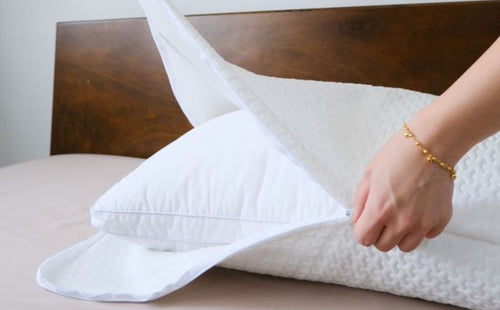
Weavve Home's waterproof pillow protector uses a 3-way zip. It opens around three sides, letting you unzip the protector fully, lay it flat, or hang it open so air moves through it freely.
We put the question to Loraine directly: is this something others are doing? "I know that the 3-way zip for pillow protectors isn't very common," she said, "but I'm not sure if we are the only one doing it. The good thing about it is we can unzip it fully and hang it to dry, versus the 2-way zip."
In Singapore's humidity, a protector that won't fully open is a real inconvenience. Waterproof fabrics take longer to dry than regular cotton to begin with. A 2-way zip traps moisture inside the protector because air can't circulate through it, especially where the fabric folds at the closed end. The 3-way zip eliminates this. You unzip it, you hang it, it dries.


Who This Is Built For
We asked Loraine directly who she thinks will benefit most. Her answer was practical and specific.
"I think those who sweat a lot when they sleep will benefit because one, our TENCEL™ is cooling, and two, it protects their pillows and bolsters from sweat."
That's a larger share of Singapore's population than most people would admit to. Even with the aircon running through the night, direct contact between your face and a pillow generates heat and accumulates sweat, oils, and moisture over the course of a night.
A pillowcase helps, but it doesn't fully stop what gets through to the pillow beneath. Over weeks and months, that builds up inside the pillow itself.
A protector sits between the pillowcase and the pillow, forming a washable barrier that your pillowcase doesn't provide. In practical terms, this extends the usable life of a pillow considerably, especially an expensive latex or memory foam one.
The bolster protector follows the same logic. Bolsters are a fixture in many Singaporean homes, often slept with directly and used for years. A breathable, waterproof protector is an easy way to keep them clean without having to launder the bolster itself regularly.
There's also the dust mite consideration. Both protectors act as a physical barrier against dust mite penetration, which is relevant for anyone with allergies, particularly during school holidays when children are home and in their beds during the day.

Frequently Asked Questions
Do I need a pillow protector in Singapore?
Yes, particularly in Singapore's tropical climate. Research from A*STAR and the National University of Singapore found that 80% of Singaporeans are sensitised to house dust mites, with around 40% developing allergic rhinitis and 15% developing asthma. Dust mites breed inside pillow fill and cannot be removed by washing the pillowcase alone. A waterproof protector forms a physical barrier that stops mites from accessing their food source.
What is the difference between a pillow protector and a pillowcase?
A pillowcase is the outer cover you sleep on and wash regularly. A pillow protector sits underneath the pillowcase, between the fabric and the pillow fill. It forms a waterproof, washable barrier that stops sweat, oils, and allergens from soaking into the pillow itself. A pillowcase does not provide this seal.
What is a 3-way zip pillow protector?
A 3-way zip opens along three sides of the pillow rather than just one. This allows the protector to be unzipped completely and laid flat or hung open to dry, which is significantly more effective than the standard 2-way zip, which traps moisture inside the closed end of the protector. In Singapore's humidity, full drying matters.
Do pillow protectors help with dust mites?
Yes. A waterproof protector with a physical barrier layer prevents dead skin cells from reaching the pillow fill, which is where dust mites breed. Protectors certified by the Asthma and Allergy Foundation of America have been shown to block over 99% of dust mite allergens initially, retaining 95% effectiveness after 18 washes.
Is TENCEL™ good for hot sleepers?
Yes. TENCEL™ Lyocell fibres draw moisture away from skin as vapour before it can pool, which keeps the sleeping surface cooler and drier. The Sleep Foundation notes TENCEL™ has a temperature regulation edge over cotton and is particularly suited to those who sleep hot or experience night sweats. Research from the Huberman Lab also confirms that a 1 to 3 degree drop in core body temperature is required for sleep onset, making a cooling pillow surface more than a comfort preference.
How often should I wash a pillow protector?
Every four to six weeks, or more frequently if you sweat heavily during sleep. Wash at or below 60°C on a gentle cycle with a mild detergent. The 3-way zip on Weavve's pillow protector means you can unzip it fully after washing and hang it open to dry properly, which is particularly helpful in Singapore's humidity.
What sizes are Weavve Home's pillow & bolster protectors?
The pillow protector measures 75cm (length) by 50cm (width), which fits a standard Singapore-sized pillow. The bolster protector measures 95cm in length and 25cm in diameter. Check your pillow and bolster dimensions against these before ordering.
The Waterproof Protection Your Pillow & Bolster Need
Pillow hygiene matters more in Singapore than most people account for. The humidity, the year-round dust mite problem, and the reality of sleeping in a warm climate all point to the same conclusion: a pillowcase is not enough.
We built these TENCEL™ Lyocell Pillow and Bolster Protectors because customers asked for them, and because the TENCEL™ material we'd already validated through our full TENCEL™ range made a strong case for the extension.
The 3-way zip on the pillow protector solves a specific and practical problem, and in Singapore's climate, being able to dry a waterproof protector properly is not a small thing. If you sweat when you sleep, or if you want to extend the life of a pillow you've already invested in, these are worth looking at.