At A Glance
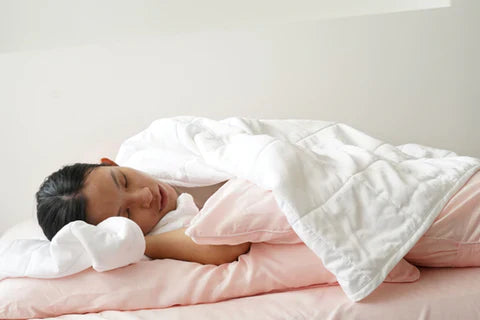
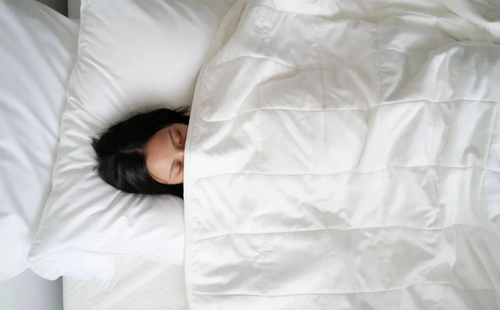
- A duvet is an insert inside a removable cover, a quilt is a thin stitched single piece, and a comforter is a thick single piece.
- In Singapore's humidity, how much heat and moisture a cover traps matters more than how warm it is.
- Weavve Home's TENCEL™ Lyocell Duvet uses 100% TENCEL™ Lyocell inside and out, with a 250 gsm fill made for tropical sleepers.
Quick Tips
- Choose a light duvet of about 250 gsm or less if you set the aircon at 25°C.
- Pick a quilt or an empty duvet cover if you sleep with just the fan or sweat easily.
- Match your duvet cover to your insert size so it doesn't bunch up or slide around.
- Wash the duvet cover every week or two and the insert every three to four months.
- Dry your duvet indoors under a fan or with a dehumidifier in the monsoon months.
The difference between duvet vs quilt vs comforter comes down to construction. A duvet is a two-piece set: a soft, filled insert that lives inside a removable, washable cover. A quilt is a thin, flat single piece, stitched right through its three layers. A comforter is a thicker single piece with its filling sewn in, made to go on the bed as it is.
Which one suits you in Singapore has less to do with the name on the label and more to do with your nights: whether the aircon runs till morning, whether you sleep with just the fan, and how you will wash and dry it in a flat with limited drying space.
Daniel Tan, co-founder of Weavve Home, also shares how we developed our TENCEL™ Lyocell Duvet specifically for tropical sleepers. His notes on what he tested and what customers tell him run through the sections below.
Duvet, Quilt and Comforter: The Differences at a Glance
All three cover you at night and add a layer of style to the bed, but they are built differently, and that changes how warm they feel, how you wash them and how they look.
|
|
Duvet |
Quilt |
Comforter |
|
Pieces |
Two: an insert plus a removable cover |
One piece with three layers (top, thin batting, back) stitched through |
One piece with three layers (front, thick filling, back) |
|
Common fillings |
Down, feather, TENCEL™ Lyocell, microfibre, bamboo blends |
Cotton, wool or polyester batting |
Down, feather, polyester |
|
Feel |
Lofty and soft; weight depends on the insert |
Thin, flat and light |
Plush and thick |
|
Warmth |
Ranges from very light to very warm, depending on the fill |
The coolest of the three |
Usually the warmest |
|
Washing |
The cover goes in the wash weekly; the insert only every few months |
The whole quilt is washed |
The whole comforter is washed, and it is bulky |
|
Style |
Change the look by changing the cover |
Often patterned or decorative |
Fixed design; it is the top layer |
|
Best for |
Aircon bedrooms, people who want to switch looks |
Fan-only rooms, warm sleepers, layering |
Cool, air-conditioned rooms; people who want one ready piece |

Why the Difference Matters More in Singapore
In a temperate country, the question is usually how warm a cover is. Here, the more useful question is how much heat and moisture it traps.
Singapore stays humid around the clock. NEA figures published by SingStat put the annual 24-hour mean relative humidity between 76% and 82.6% every year from 2016 to 2023. Humid air slows down how quickly sweat evaporates, so a cover that feels cosy in a London winter can feel stuffy in a Toa Payoh bedroom.
Sleep researchers have measured this effect. In a 2012 review in the Journal of Physiological Anthropology, Kazue Okamoto-Mizuno and Koh Mizuno found that both heat and cold exposure increase wakefulness and reduce deep and REM sleep, and that humid heat adds to the thermal load on the body during sleep. They also point to the "bed climate", the temperature and humidity of the pocket of air between you and your covers, as a key factor in how well you sleep.
Dan sees the same thing in how Singaporeans actually sleep:
“The South East Asian / Singapore climate is naturally warm and humid, and a large portion of sleepers in the tropics prefer to sleep with a lightweight blanket/duvet. This applies to people who sleep with or without air conditioning, although some may prefer heavier duvets but need air conditioning to lower the room temperature.”
(Daniel Tan, Co-Founder, Weavve Home)
There is a twist that people who move here from colder countries often miss. Our weather is warm, but it is not uniformly warm.
“However, some nights, especially during the rainy seasons, may be very cool or even cold, and the same sleepers who may be optimizing against heat most of the time may feel cold during those nights. Unlike temperate countries where sleepers may change their duvets/blankets according to the season, the variability of temperatures in Singapore may render that a bit excessive.”
(Dan)
For expats, that means the winter duvet from home is usually too much, and a separate "summer" and "winter" duvet is usually more than you need. What works here is a single cover that copes with both a hot dry spell and a cool monsoon night.
What Is a Duvet?
A duvet is a soft, flat bag of filling, called the insert, that sits inside a removable cover, the way a pillow sits inside a pillowcase. The insert does the work of keeping you warm; the cover protects it, takes the sweat and body oils of daily use, and sets the look of your bed.
Because the cover comes off, you wash it with your sheets, and the insert itself only needs washing every few months. In many homes, a duvet also replaces the flat sheet and blanket entirely, which is why making the bed is so quick.
For a deeper look at fillings and how to buy one, see What Is A Duvet? All You Need To Know Before Buying, where we compare down, feather, silk, wool, microfibre and TENCEL™ Lyocell inserts.

Featuring Weavve Home's TENCEL™ Lyocell Duvet
A Brief History of the Duvet
Europeans slept under down-filled covers for centuries, but the duvet as most of us know it reached the mainstream through British designer Sir Terence Conran. He sold the "continental quilt" at his first Habitat store in London in 1964, and, as The Independent recounts, promoted it as a way to make the bed with "just a couple of shakes". The idea has not changed since: one cover, less fuss.
What Makes Up a Duvet?
Every duvet insert has two parts: the shell and the filling.
The shell holds the filling in and sits closest to the cover, so it needs to be woven tightly enough to stop the fibres poking through, while staying breathable. To understand how weave density affects this, The Real Truth Behind Bed Sheet Thread Count explains why a higher number isn't always better.
The filling decides how warm, heavy, and breathable the duvet is. Natural fills (down, feather, wool, silk) trap more heat. Synthetic and plant-based fills (microfibre, TENCEL™ Lyocell) are usually lighter and easier to wash.

Featuring Weavve Home's TENCEL™ Lyocell Duvet
What Is a Quilt?
A quilt is three layers of fabric (a decorative top, a thin layer of batting, and a backing) stitched together right through, usually in a grid, diamond, or patchwork pattern. The word comes from the Latin culcita, meaning a stuffed mattress or cushion, and quilting has been used to make warm bed covers since at least medieval times.
Because the batting is thin, a quilt is flat, light, and the most breathable of the three. It is also the most decorative: handmade and heirloom quilts are often pieced together from many fabrics.
"Quilt" vs "Quilt Cover": What Singaporeans Mean
Here is where shopping in Singapore gets confusing. Locally, "quilt" is often used for what is technically a duvet or a comforter, and a "quilt cover" almost always means a duvet cover. This follows British and Australian usage, where "quilt" is a common everyday word for a duvet, and Singapore retailers often use "quilt cover" and "duvet cover" interchangeably.
So if a shop sells you a "quilt" with a "quilt cover", check whether the quilt is a thin stitched-through piece or a filled insert. If it goes inside a cover, it is a duvet in all but name.
What Is a Comforter?
A comforter is a thick, fluffy single piece: a front, a generous layer of filling and a back, quilted at intervals to keep the filling evenly spread. It needs no cover, because the outer fabric is the design. In the US, it is often sold as part of a "bed in a bag" set with matching shams.
That convenience has a catch. With no cover to take the daily sweat and dust, the whole comforter needs washing more often, and a thick, bulky one can be a struggle for a home washing machine and slow to dry in our humidity. It also tends to be the warmest of the three, so most people in Singapore only find it comfortable in a cold, air-conditioned room.

Featuring Weavve Home's Signature TENCEL™ Duvet Cover
Duvet vs Quilt vs Comforter: Which One Should You Choose?
There is no single right answer to duvet vs quilt vs comforter: it depends on how you sleep, how cool you keep the room, and how much laundry you want to do. Here is how a Singaporean chooses in real life:
|
Scenario |
Best choice |
Why |
|
"Aircon is on all night, I want to feel like I'm in a 5-star hotel." |
Duvet (with a lightweight insert of about 250 gsm or less) |
Plush and lofty, but you choose the insert and cover so you don't overheat. |
|
"Aircon on most nights, fan only on rainy ones." |
Duvet with a breathable fill such as TENCEL™ Lyocell |
One cover that handles both warm and cool nights, so there is no seasonal swap. |
|
"I hate changing covers, and I have a large washing machine or a coin laundromat nearby." |
Comforter |
No setup hassle: just wash, dry, and throw it back on the bed. Best if you keep the aircon cold all night. |
|
"I sleep with the fan on, or I sweat very easily at night." |
Quilt (or an empty duvet cover) |
Thin, flat, and highly breathable, so it won't trap our tropical humidity and is easy to kick off. |
Pros and Cons at a Glance
|
|
Pros |
Cons |
|
Duvet |
Washable cover, wide range of weights, easy to restyle for Chinese New Year, Hari Raya or Deepavali |
Putting the cover on takes practice; a heavy insert can be too warm |
|
Quilt |
Cool, light, decorative, easy to layer and wash |
Not enough on its own for a cold aircon room |
|
Comforter |
Plush, ready to use, no cover needed |
Bulky to wash and dry, usually too warm without strong aircon |
If you share a bed, the choice can be a negotiation. A 2026 household study led by the Singapore University of Technology and Design, with the National University of Singapore, surveyed 1,009 people across 416 public housing households. It found that cooling choices are negotiated within the home, and that night-time aircon can become routine because one person prefers a colder room. If that sounds like your bedroom, two lighter covers, or one lightweight duvet that the warmer sleeper can push half off, often solves more arguments than a lower aircon setting.

Featuring Weavve Home's TENCEL™ Lyocell Duvet
How to Choose a Duvet: Top Factors to Consider
If you have landed on a duvet, this duvet buying guide covers the nine things worth checking before you buy duvet inserts in Singapore.
TOG
TOG (thermal overall grade) measures how well a duvet insulates. The scale runs from about 1.5 TOG, which is very light, to around 15 TOG, which is very warm; the higher the number, the warmer the duvet. The full scale is explained in Blanket & Duvet: Tog, Fill Type, Power & Weight Explained.
TOG ratings are mainly used by British brands, and many duvets sold in Singapore, including ours, list fill weight in gsm instead.
What TOG Works in a Singapore Bedroom?
Start from how cold you keep the room, not from the duvet. Singapore's Go 25 movement, launched by the Ministry of Sustainability and the Environment in 2025, encourages homes to set the aircon at 25°C or above, and notes that pairing 25°C with a fan can feel as cool as 23°C. At that setting, a light duvet at the low end of the TOG scale (or around 250 gsm or less) is usually plenty. Only very cold rooms call for anything warmer.
A note for parents: babies should not sleep with a duvet, quilt or comforter at all. HealthHub advises against placing blankets, pillows, cot bumpers or soft toys in the cot of a baby under six months, as they increase the risk of sudden infant death syndrome (SIDS). The US NICHD also advises keeping soft objects and loose bedding out of a baby's sleep area.
Material
Natural fills like goose down and feathers are soft, warm, and lofty, and much loved in cold climates. In ours, they tend to hold more heat than most people want, and they are not suitable if you are allergic to feathers.
Synthetic and semi-synthetic fills are lighter and easier to wash. TENCEL™ Lyocell, made from wood pulp, is known for drawing moisture away from the skin, which helps the bed climate stay drier on humid nights.

Fill Power and Fill Weight
These two numbers are often confused.
Fill power applies to down and feather duvets. It measures how much space an ounce of down fills, so higher fill power means loftier, lighter down that insulates well. If your duvet is not down, you can ignore it.
Fill weight, given in grams per square metre (gsm), is the weight of the filling. More filling means a heavier, warmer duvet. As a rough guide:
|
Preference and use |
Fill weight |
|
Light, warm-weather use |
150 to 250 gsm |
|
Snug and cosy |
300 to 400 gsm |
|
Extra warmth |
450 gsm and above |
Construction
How the duvet is stitched decides whether the filling stays evenly spread.
Baffle Box
Baffle box duvets have thin strips of fabric sewn between the top and bottom layers, forming three-dimensional boxes. The filling has room to loft without being pressed flat, so the duvet stays fluffy and breathable. It is common in higher-end duvets.
Box Stitch
Box stitching sews the top and bottom layers directly together in a grid, without the fabric walls. It is simpler, flatter, and common in lighter, lower fill-power duvets.
Duvet Sizes
Singapore beds come in Single, Super Single, Queen and King, and duvets are cut wider and longer than the mattress so they drape over the sides. Weavve Home's duvets come in these sizes:
|
Bed size |
Duvet size (W x L) |
|
Single |
140 x 210 cm |
|
Super Single |
180 x 210 cm |
|
Queen |
210 x 210 cm |
|
King |
250 x 210 cm |
A few tips. If your partner steals the covers, size up. If you are tall, check the 210 cm length against your height and your bed. And always match the cover to the insert: too small and the duvet bunches up, too large and it slides around inside.
Hypoallergenic Properties
If you have sensitive skin or allergies, avoid wool, feather and down fills, and choose one that resists dust mites and washes well. Moisture-wicking fibres like TENCEL™ Lyocell help keep the bed drier, which matters in a climate where dust mites thrive in humidity.
Certification
Look for OEKO-TEX® Standard 100, which tests every component of a product, from the fabric to the thread, for harmful substances. It is an easy way to check a brand's claims without researching every material yourself.

Featuring Weavve Home's Signature TENCEL™ Collection
Care
Finally, be honest about your laundry. If you are short on time or drying space, choose an insert that can go in a home washing machine and a cover you can wash weekly.
Where to Buy a Duvet or Quilt in Singapore
You can buy duvets, quilts and comforters from department stores, furniture showrooms and online marketplaces like Shopee and Lazada. Online shopping is convenient and often cheaper, but you cannot feel the fabric or the weight, so check the fill weight in gsm, the size in centimetres, and the return policy before you buy.
Weavve Home's duvet is available on weavvehome.com, and you can see it in person at partner showrooms such as Mega Furniture @ Hillview and Star Living @ Tampines (call ahead to check stock). Our Returns & Exchanges page covers what happens if something is not right.
Why Choose Weavve Home's TENCEL™ Lyocell Duvet?
We set out to build one duvet that a tropical sleeper could use every night of the year. In Dan's words:
“Hence, we wanted to find a solution where a single duvet could provide a sleeper in the tropics thermal comfort all year round, in a lightweight form factor.”
(Dan)
1. 100% TENCEL™ Lyocell, Inside and Out
Ours uses 100% TENCEL™ Lyocell in both layers, rather than a blend or TENCEL™ in only one of them: a 350 thread count sateen shell and a 100% TENCEL™ Lyocell filling. It was the first duvet of its kind in Singapore.
“The goal of the TENCEL duvet was to maximize comfort leveraging its thermoregulating properties; hence, we used 100% TENCEL Lyocell for both the shell and the filling.”
(Dan)
You can read the full story of its launch in The First 100% TENCEL™️ Lyocell Duvet In Singapore.
2. 250 gsm: Plush Enough to Feel Like a Duvet
At 250 gsm, our duvet sits at the top of the light, warm-weather range. That was a deliberate choice.
“As we wanted to create a duvet in the sweet spot for people who use duvets (as opposed to replacing a very lightweight blanket, or for some people who actually sleep with a flat sheet or empty duvet cover on top of their bodies), we chose 250 gsm to create the plushness of a duvet, while the 100% TENCEL inside and outside allowed breathability.”
(Dan)
3. Built to Stay Fresh
The shell is treated with SILVADUR™ antimicrobial technology by DuPont, which fights the bacteria, mould and fungi that cause odour and discolouration, with protection lasting up to 50 washes. The duvet is OEKO-TEX® Standard 100 certified, and pocketed stitching keeps the filling evenly spread.
4. Loops That Keep It in Place
Loop ties on every corner hold the duvet inside its cover, with three extra loops along the sides on Queen sizes and larger, so it doesn't bunch up at one end of the cover by morning.
“However, for people who prefer a very lightweight blanket or sheet on top of them, or a heavy-duty plush duvet, this may not fit their preference.”
(Dan)
If you sleep with just a sheet, a quilt or a light throw will suit you better. If you want a heavy, sink-in feel, Weighted Blanket Vs Duvet: Best Blanket For Deep Sleep compares our duvet with our Weighted Blanket.

Featured Product
100% TENCEL™ Lyocell inside and out, with a 250 gsm fill for Singapore nights.
Shop NowA Guide to Washing a Duvet
Because the cover takes the daily wear, the insert needs washing far less often than your sheets.
How Often to Wash
Wash the cover every week or two with your sheets. Wash the insert itself every three to four months, or at least twice a year, and air it out between washes.
How to Wash Weavve Home's TENCEL™ Lyocell Duvet
Hand wash, or machine wash on a gentle cycle, at 20°C or below, if your machine can take it without cramming. Use a gentle detergent, dilute concentrated detergents, and avoid bleach or chlorine, which damage TENCEL™ Lyocell fibres. Don't soak it, dry clean it, tumble dry it or iron it.
Drying a Duvet in Singapore's Humidity
Hang or lay the duvet flat to dry, away from direct sunlight, and spread the filling evenly so it keeps its shape. In the monsoon months, a damp duvet can take a long time to dry outdoors. Indoors, under a fan or in a room with a dehumidifier or the aircon running, is often faster, and it avoids hanging a heavy wet duvet out of the window on a bamboo pole. Make sure it is completely dry before it goes back into its cover, or it can start to smell musty.
Washing a Quilt or Comforter
Quilts are usually machine washable on a gentle cycle and dry quickly because they are thin. Comforters are harder: the whole piece goes in the wash, it needs space in the drum to get clean, and the thick filling takes a long time to dry. Always follow the care label.
Frequently Asked Questions
How do I put on a duvet cover?
Turn the cover inside out, tie its inner corner ties to the loops on the insert, then roll or flip the cover the right way out over the insert and shake it into place. Putting On A Duvet Cover Easily: A Step-By-Step Guide shows two methods, including the burrito method.
What can I use a duvet cover for?
Besides duvets, our duvet covers also fit our Weighted Blanket, which comes in the same sizes as our duvets and has corner loops to hold it in place.
How do I care for my duvet cover?
Wash it separately before first use, then on a gentle cycle: cold water at or below 30°C for TENCEL™ covers, or at or below 40°C for cotton. Don't use bleach, tumble dry or dry clean it, and line dry it away from direct sunlight. Full instructions are in the care guide.
What's the difference between duvet and comforter sets?
A comforter set is one finished piece with its filling and design built in, usually with matching pillowcases. A duvet set is an insert plus a separate, washable cover, so you change the look by changing the cover and only wash the insert occasionally.
Are duvet and quilt the same?
Not technically. A duvet is a filled insert inside a removable cover; a quilt is a thin, single piece stitched through its three layers. In Singapore, though, the words are often used interchangeably, so check how the product is built rather than what it is called.
Is a quilt or duvet warmer?
Usually the duvet. Its thicker, loftier filling traps more air, so even a lightweight duvet tends to be warmer than a quilt. The exact warmth depends on the duvet's fill weight and fibre.
Can you use a duvet as a quilt?
Not quite. A duvet insert is meant to go inside a cover, which protects it from sweat and makes washing easier. If you want a quilt-like feel, use a very light insert or simply an empty duvet cover on warm nights.
How long do duvets last?
The Sleep Council advises replacing a duvet about every five years, though a good one kept in a cover can last longer. Replace it if it feels thin or limp, has gone lumpy or uneven, or the filling is coming through the shell.
How do I know if I have a duvet or a comforter?
If it is one finished piece with its own decorative fabric, it is a comforter. If it is a plain inner layer that goes inside a separate removable cover, it is a duvet.
Can I wash a full-sized Queen or King comforter in a standard 8 kg HDB washing machine?
Sometimes a Queen, rarely a King. The 8 kg rating refers to a load of dry laundry, but a comforter is bulky and needs room to move in the drum to get clean and rinse properly. If it fills the drum when loosely loaded, take it to a self-service laundromat with large washers instead.
Why do local shops sell "duvet/quilt inserts" together if they are supposed to be different?
Because in Singapore, as in Britain and Australia, "quilt" is often used as an everyday word for a duvet. A "duvet/quilt insert" is simply a filled insert that goes inside a cover. A true stitched-through quilt doesn't need a cover at all.
I sleep with the aircon set to 25°C every night. What GSM or TOG rating should I actually buy?
At 25°C, choose a light duvet: around 250 gsm or less, or the lowest TOG ratings if your brand lists TOG. A breathable fill like TENCEL™ Lyocell helps on humid nights. If you still feel warm, add a fan before reaching for a lower aircon setting.
Is it better to get a comforter or a duvet if I live in a flat with no balcony or outdoor drying space?
A duvet. You wash and dry the thin cover weekly, which dries quickly indoors under a fan, and only wash the insert every few months. A comforter has to be washed and dried whole every time, which is slow without outdoor space.
Do I need a duvet if I sleep with the aircon on?
Most people do, because an air-conditioned room cools quickly once you are asleep. A lightweight, breathable duvet lets you set the aircon a little warmer while staying comfortable, which also helps with your electricity bill.
Which is best for hot sleepers in Singapore?
A quilt if you sleep with the fan only; a lightweight duvet with a moisture-wicking fill if you use the aircon. Hot sleepers should avoid thick comforters and down duvets, which hold the most heat.
Sleep Cool Under a TENCEL™ Duvet Through Humid Singapore Nights
The right cover in Singapore is not the warmest or the fluffiest; it is the one that suits your room and your nights. For most of us, that means a lightweight, breathable duvet in a cover we can wash every week.
Our TENCEL™ Lyocell Duvet was built for exactly that: 100% TENCEL™ Lyocell inside and out, 250 gsm of filling, and tested by Dan on both cold rainy nights and cold aircon nights. Pair it with a Signature TENCEL™ Duvet Cover for a smooth, cool feel against your skin.
“The duvet really does what it promises - keeps you warm but not overly warm where you perspire and feel icky all over. I have not encountered any duvet like this outside. Worth the splurge!”
(Gina F., verified customer review)
“The material is great for Singapore, where you need a material that is breathable and light.”
(Geoffrey B., verified customer review)

Featured Product
100% TENCEL™ Lyocell sateen cover, 400 thread count, for a smooth, cool feel.
Shop NowThis guide is brought to you by Weavve Home, a Singapore home brand specialising in TENCEL™ Lyocell bedding designed for the local climate. Browse the Covers & Inserts collection to start.